Chapters
Sertorius was a Roman commander and politician living at the turn of the 2nd and 1st centuries BCE, who opposed the Roman war machine. Due to his belonging to the popular camp, he was forced to leave Rome and finally headed the Iberian tribes and resisted in the 80-73 BCE.
Background of events
The beginning of the 1st century BCE heralded an extremely bloody century for the Roman Republic. The political division into optimates (supporters of maintaining power by the elite and rich) and popular (supporters of reforms and improving the fate of the lower classes) led to a strong destabilization of the Roman state. The rivalry of ambitious politicians Lucius Cornelius Sulla and Gaius Marius formed strong divisions in Rome, which resulted in bloody clashes of supporters in the streets, murders, legions marching on the capital and the assumption of an unlimited dictatorship by Sulla.
Sertorius
Sertorius (Quintus Sertorius) was a Roman commander and politician who lived in the years 126-73 BCE. He had the status of equestrian. He came from central Italy, and his political career was associated with Gaius Marius, leader of the popular party and main rival of Lucius Cornelius Sulla (optimates). Under Marius’s orders, he served in the war against Cymbrom and Teutons. In 98 BCE he fought as a military tribune in Spain during the Social War (helium sociale, 90- 88 BCE), where he commanded one of the Roman legions.
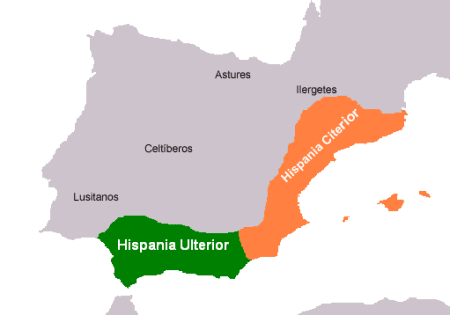
During the Civil War in 87 BCE, he was a member of the popular party and one of the four Marian leaders. In 83 BCE he was to take over the governorship of the Province of Closer Spain (Hispania Citerior). This was to force him to leave Rome, where he was to become a consul. Before he could leave, however, the nomination was withdrawn by the senate dominated by the optimates. Sertorius gathered a small detachment of followers with whom he travelled 82 BCE to the Iberian Peninsula, where he gained the support of the Celtic tribes. With time, however, under pressure from Sulla’s commanders, who sentenced him to death, he was forced to leave Spain. He took refuge in what was then Moorish Morocco, where he fought in the local war in the city of Tangier and from where he made an expedition to the Canary Islands.
Uprising in Spain
In the first century BCE, the Iberian tribes, subordinate to Rome, felt the yoke of the Empire more and more strongly. The Iberians were forced to constantly supply their fighters to Rome’s numerous war campaigns. Moreover, Spanish communities complained about Roman tax collectors or moneylenders who plundered them mercilessly. The tribes were forced to pay for the Roman legions stationed on the Peninsula, what’s more, without having the status of Roman citizens.
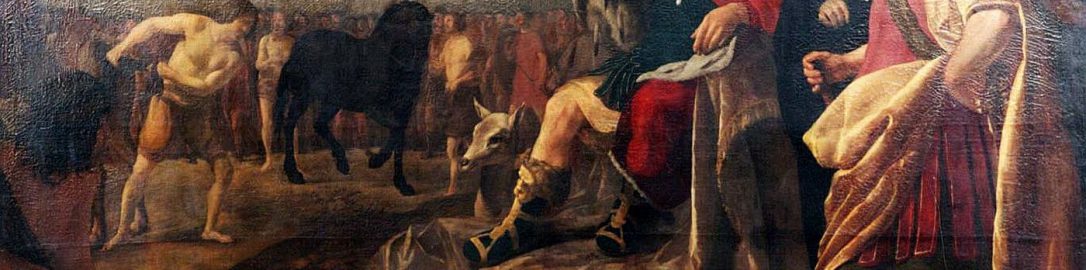
The Lusitanians sacrificed prisoners, their entrails were used for divination. In addition, Strabo, a Greek geographer and historian, describes the Lusitanians in “Geographia” as a people drinking beer, using butter and baking bread from ground acorns, based on the work of Artemidor.
One of the more rebellious peoples was the Lusitanians, who occupied the central-eastern part of Spain. After long resistance, they were conquered by Rome in 139 BCE and were gradually romanized. The widespread hatred of the Romans and the internal divisions in the Roman state encouraged them to look for a “better future”. To this end, in 80 BCE, the Lusitans sent emissaries to Sertorius with a proposal to return to the Iberian Peninsula from Africa. He was to lead the uprising against Rome, under the authority of Sulla. Sertorius, unable to count on an amnesty, probably decided that using Lusitan’s independence aspirations was the best solution for this situation. He believed that this way he would defeat Sulla’s camp.
Sertorius, after the destruction of the Roman fleet of Gaius Aurelius Kota, landed on the Iberian Peninsula. According to Plutarch, he first went to Lusitania to organize the tribes there, and then rushed into battle. Sertorius’ forces defeated the Roman army led by Fulfidius in the Battle of the Guadalquivir (some historians, such as Philip Spann, claim that the battle took place during the march to Lusitania).